Why PromptQL works

PromptQL is trusted by platform and AI transformation teams responsible because it eliminates the three main bottlenecks that prevent AI from working at scale.

Context engineering

Existing approaches like semantic layers and knowledge graphs don't scale. They rely on centralized ownership, upfront modeling, and can't keep up with evolving business logic.

Security

AI introduces a new data access surface that's much harder to secure. It is difficult to enforce existing rules, and expanding access exposes systems not designed for broad use.

Cost

In most AI systems, cost is hard to control. You see token usage, but have few levers to reduce it in a targeted way without impacting quality.

PILLAR 1

A wikipedia-style OS for shared context

Build shared context like Wikipedia—a living system where knowledge is created, refined, and validated through use. Context grows as your team works, becoming more accurate over time.

Anyone can create and update context in the flow of work, not as a separate documentation step via a gatekeeping team.

Experts across the organization can contribute directly, with quality improving through usage, feedback, and iteration.

Capture metrics, definitions, operational logic, nuance and exceptions, to represent how the business actually works.

Both technical and business users can understand and contribute—so context isn't lost in translation or locked behind specialists.

Wikipedia-like governance ensures oversight without bottlenecks. Every change is versioned, attributed, auditable, and reversible.

AI flags gaps, suggests improvements, and helps generate context—all in the flow of work, reducing the burden of contribution. User guides, AI writes.

Omar H.
Omar H. (Logistics Lead)
@PromptQL  check on-time delivery excluding shipments flagged "weather delay."
PromptQL
PromptQL
Completed 2 steps
Filtering shipments flagged as weather delay
Recomputing with calendar-window normalization
Reported OTD: 89% vs. OTD (excluding weather delays): 94%
Majority of variance tied to 3 storm-impacted regions.
Omar H.
Omar H. (Logistics Lead)
@PromptQL  SLA reviews should always exclude shipments officially coded as weather delays.
PromptQL
PromptQL
PromptQL wants to learn
Review and edit if needed, then click "Add to wiki"
SLA reviews should exclude shipments officially coded as "weather delay" to reflect controllable delivery performance.
+Weather Delay SLA RuleAdded
Created by Sarah Chen · Jan 12, 2026  |  Last modified by Omar H. · Feb 16, 2026

On-Time Delivery (OTD) Metrics

On-Time Delivery (OTD) measures the percentage of shipments delivered within the committed timeframe. Our company target is 95% OTD across all regions.

Standard Formula

otd_rate = (on_time_deliveries / total_deliveries) × 100

Weather Delay Exclusions

SLA reviews should exclude shipments officially coded as "weather delay" to reflect controllable delivery performance.

Delay Categories

Shipments may be flagged with the following delay codes:

  • Weather Delay: Storm, flooding, or severe weather conditions
  • Carrier Delay: Capacity or operational issues with shipping partner
  • Customs Delay: International shipments held at border
  • Customer Delay: Recipient unavailable or address issues

Regional Targets

While the company-wide target is 95%, regional targets may vary based on logistics infrastructure and historical performance patterns.
OTD MetricsShipmentsCarriersSLA PoliciesRegional TargetsDelay CodesWarehouse OpsOrder FulfillmentTracking EventsShip DatesCarrier PerformanceRoute OptimizationTransit TimesContract TermsPenalty ClausesDistribution CentersZone MappingWeather EventsException HandlingPick & PackInventory LevelsCustomer OrdersReturnsFreight CostsLast MileVendor AgreementsCapacity PlanningStorm AlertsDock SchedulingE-commerceRate CardsCutoff TimesDelivery WindowsCredit MemosService Levels

PILLAR 2

Easy access permission and audit

PromptQL simplifies data access control for AI across the board as you onboard new data sources and users. You can either pass through existing controls or have PromptQL suggest and implement permissions based on user roles and data sensitivity.

Easy authorization

Define and manage access with simple, intuitive controls, or inherit and enforce policies from existing systems like SSO and IAM.

AI-guided access control

PromptQL suggests what access should be granted based on roles and resource type, making it easy to onboard new users and sources.

Permission-aware execution

Every request is evaluated in real time against permissions. Queries only return what the requester is allowed to see, no matter how they are generated.

Central user and agent directory

Manage identities for both humans and AI agents in one place, with consistent policies applied across all interactions.

Full auditability

Every action is logged, traceable, and explainable. See who accessed what, ensuring accountability and simplifying compliance.

Scalable access governance

Easily extend access policies as you add new data sources, users, and AI agents, without rewriting rules or introducing risk.

PILLAR 3

Cost budgeting and optimization

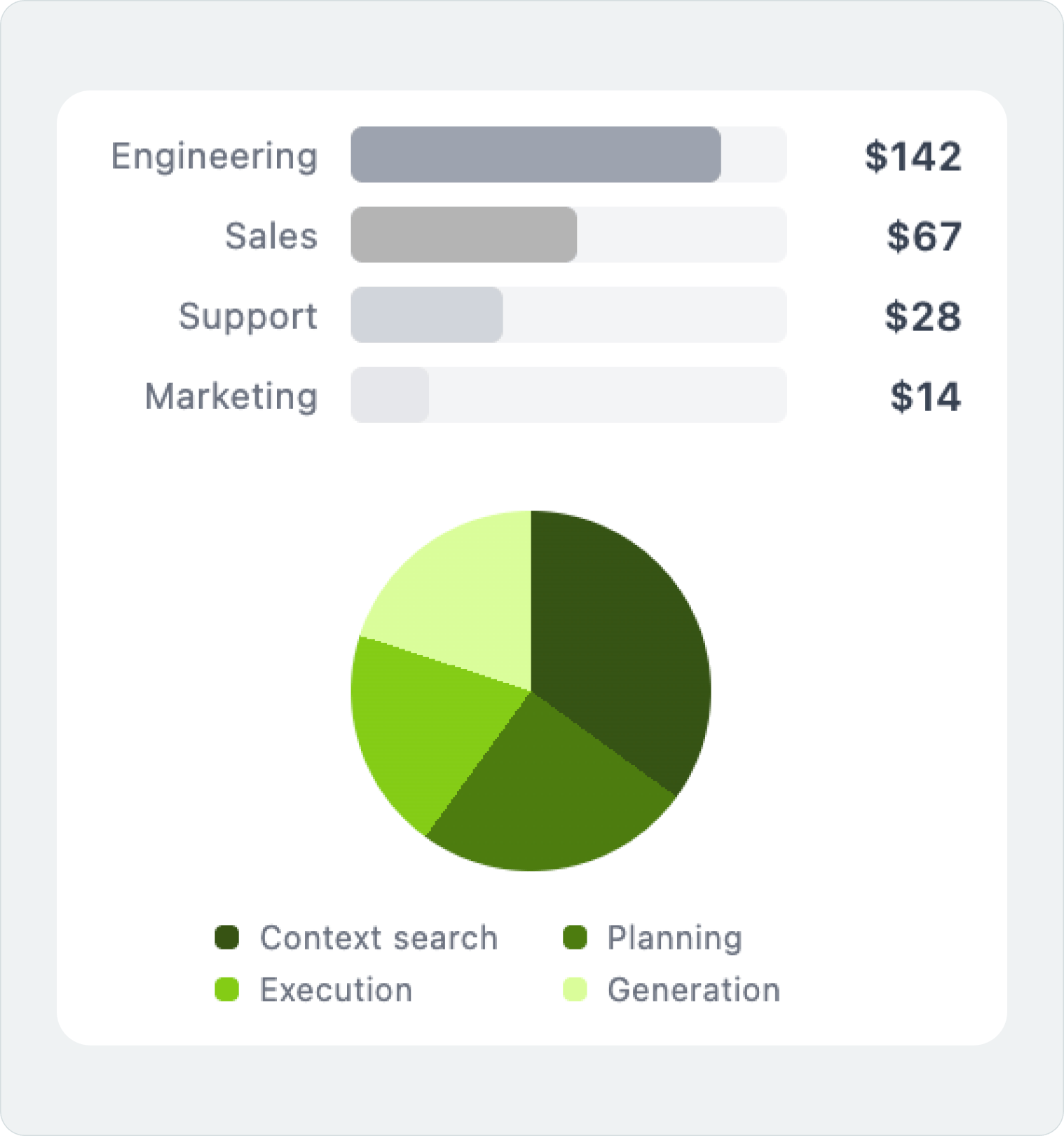
PromptQL gives you full visibility into AI spend across context exploration, query planning, and execution, with recommendations and controls to optimize each layer independently.

Context design

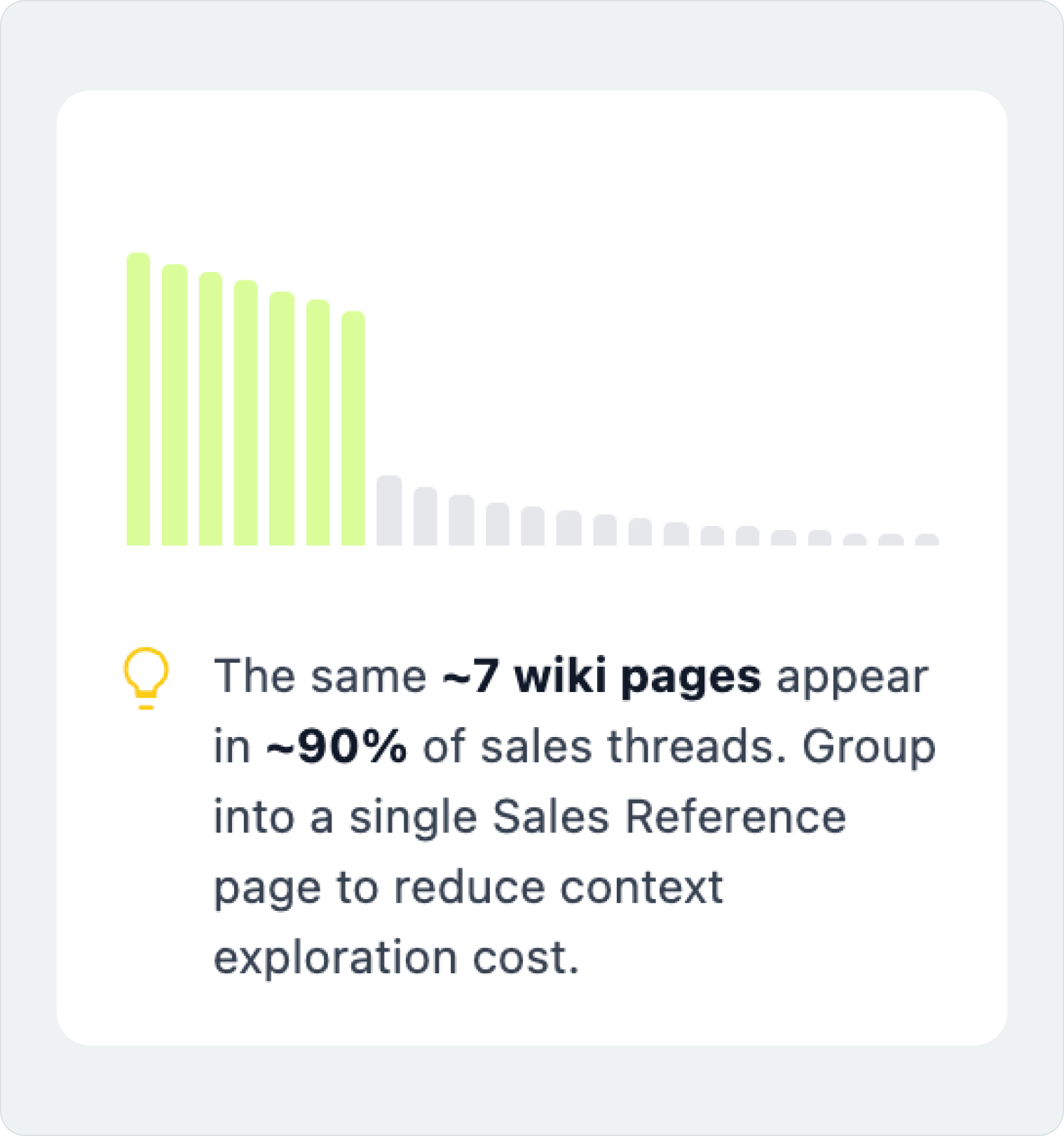
PromptQL suggests context that should be persisted in the wiki or restructured to reduce token usage on context search and exploration.

Reusable programs

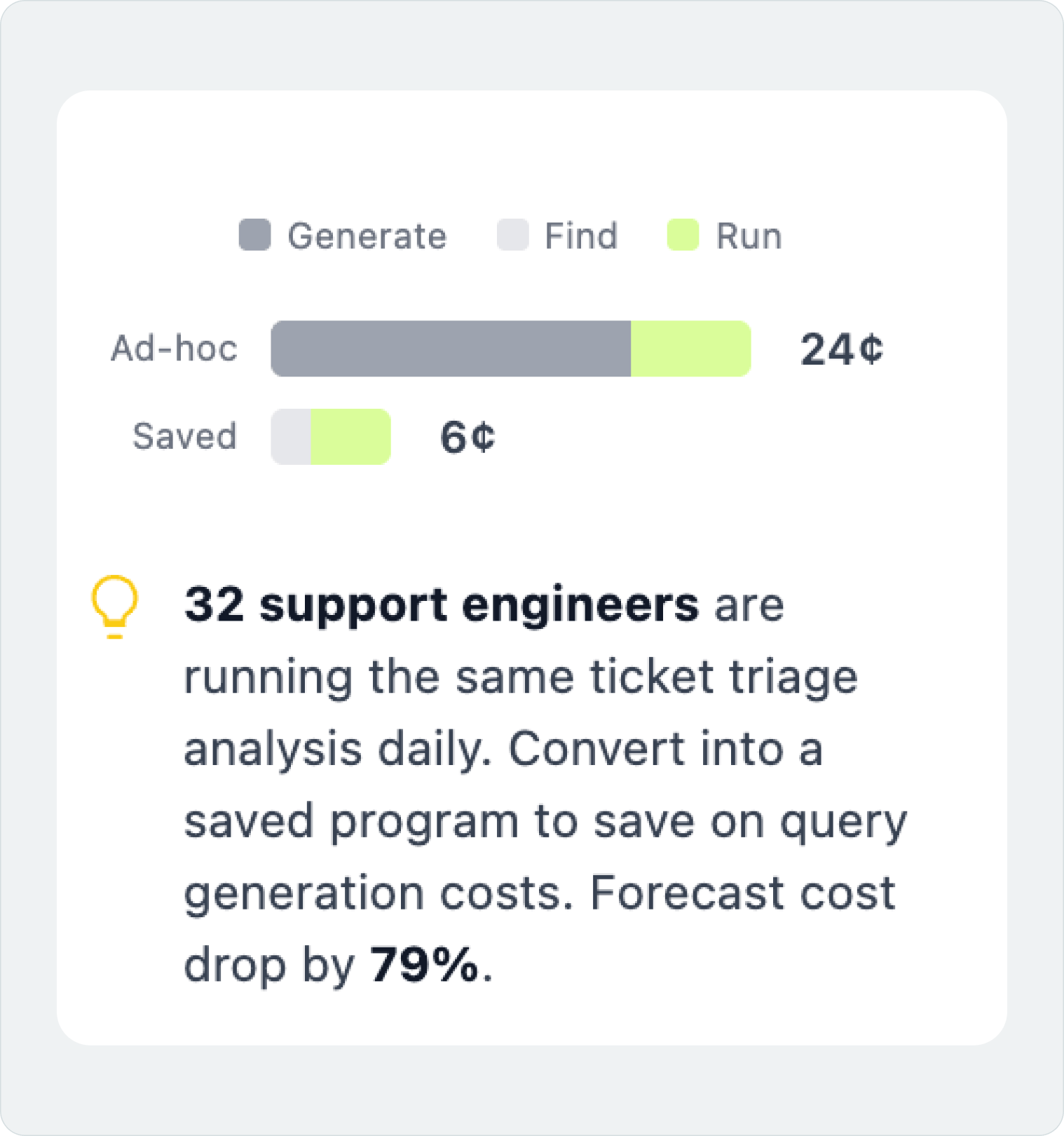
Convert repeated workflows into reusable programs, eliminating the need to regenerate plans on each request and reducing token consumption.

Granular usage controls

Get fine-grained visibility into usage and enforce limits to control spend, prevent overuse, and enable chargeback.