Most AI tools were built for one person at a time. You open a private chat, teach it something, and close the tab, and everything you just taught it stays with you. That model made sense when AI was a personal productivity boost. It breaks down the moment AI agents are meant to work alongside an entire team, not just one person's session.
That shift changes what "collaboration" actually needs to mean. This guide looks at what real human-agent collaboration requires, and how it actually gets built.
Key Takeaways
- Shared context beats private memory. An agent that only remembers what one person told it isn't collaborating with a team, it's assisting one person at a time.
- Reasoning has to be visible, not just the output. Trust comes from seeing what an agent pulled and assumed, not just receiving a finished answer.
- Not every interaction needs to be live. Some work is better structured as a defined checkpoint than constant supervision.
- Corrections should update everyone, not just the current conversation. A fix taught once should stay fixed for the whole team.
- Permissions need to follow the person, not a shared identity. A broad, shared credential handed to an agent becomes a risk the moment more than one person is using it.
What human-agent collaboration actually means
Human-agent collaboration is a real, studied field. It's a system where humans and AI interact as teammates rather than through pure supervisory control or a traditional interface, with the agent given a genuine degree of autonomy rather than just responding to fixed commands.
The field centers on a few practical design considerations:
- An agent needs to decide when something is worth interrupting for, and when it can wait.
- It needs to share enough detail to be useful, without burying a person in noise.
- It needs to recognize the limit of what it should resolve on its own and hand the rest back to a human.
Getting these right is what separates a genuine collaborator from a tool that just happens to talk back.
How humans and AI agents can actually work together
A few patterns consistently separate a real collaboration from an AI tool that just happens to sit next to a team. Here's what each one actually looks like in practice.
1. The agent and the team work from the same context
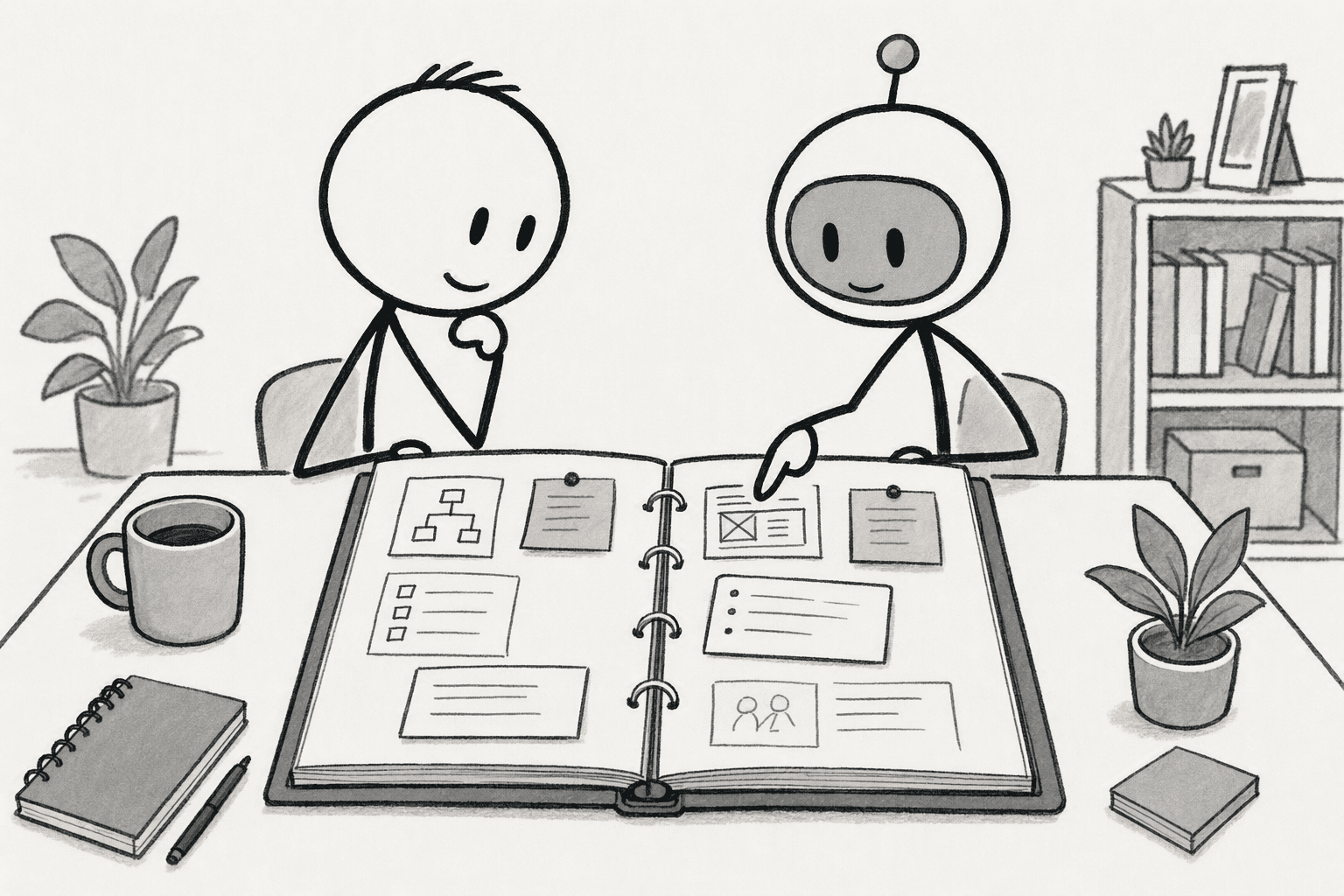
Instead of the agent holding a private memory only it can see, or a person carrying context only they remember, both draw from one shared record. When a person adds information or corrects something, that update becomes part of what the agent works from immediately, and what any other teammate interacting with it sees too. Neither side is reconstructing the other's picture from scratch on every interaction.
2. The agent operates inside the conversation, not next to it
Rather than requiring someone to extract a task from a discussion and hand it to a separate tool, the agent works directly where the conversation is already happening, in the same thread, the same channel. It can read what's already been said, act on it, and respond in that same place, so nobody has to translate between where the conversation happened and where the work actually got done.
3. The agent surfaces what it pulled and assumed alongside its answer
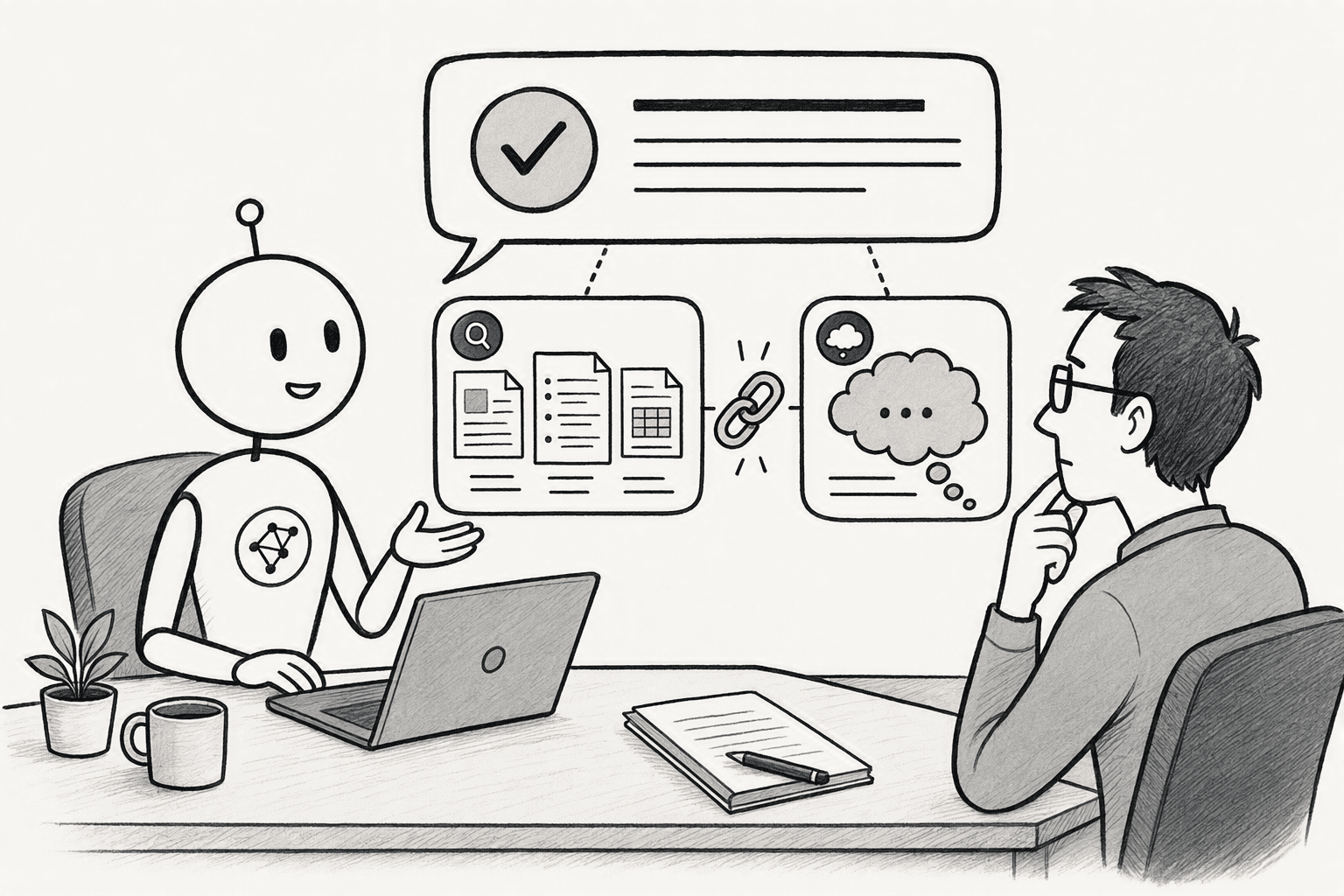
Rather than returning a finished answer with no visible path to it, the agent shows the sources it used and the reasoning it followed to get there. A person can check that trail before acting on the answer, rather than having to reverse-engineer what happened after something goes wrong. This is especially useful when the agent followed a defined, repeatable approach, since that trail is something a person can actually verify, not just something to guess at after the fact.
4. Review happens at a defined checkpoint, not constant supervision
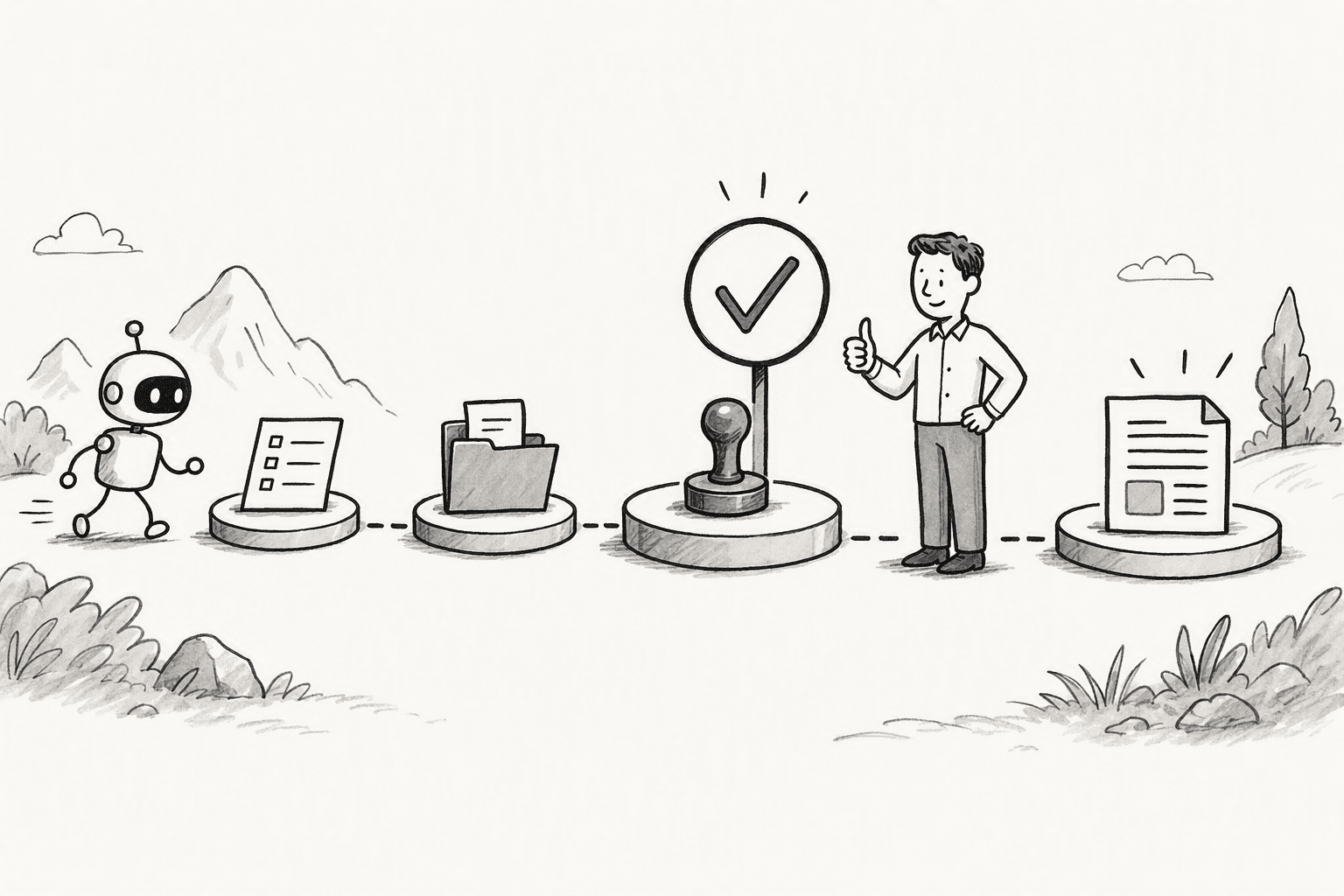
The agent completes a piece of work end to end, and a human reviews and approves the result at a specific point, rather than someone watching and steering every individual step. This suits tasks where the real value sits in the review itself, catching an issue before it ships, not in a constant back-and-forth conversation.
5. The right person gets pulled into the thread mid-task
When a task needs input only a specific person can give, that person gets brought directly into the existing conversation, rather than the task pausing while someone goes and finds them somewhere else. The agent keeps working with what it already has while that handoff happens, instead of the whole task stalling until the right person responds.
6. A correction updates the shared record, not just that one reply
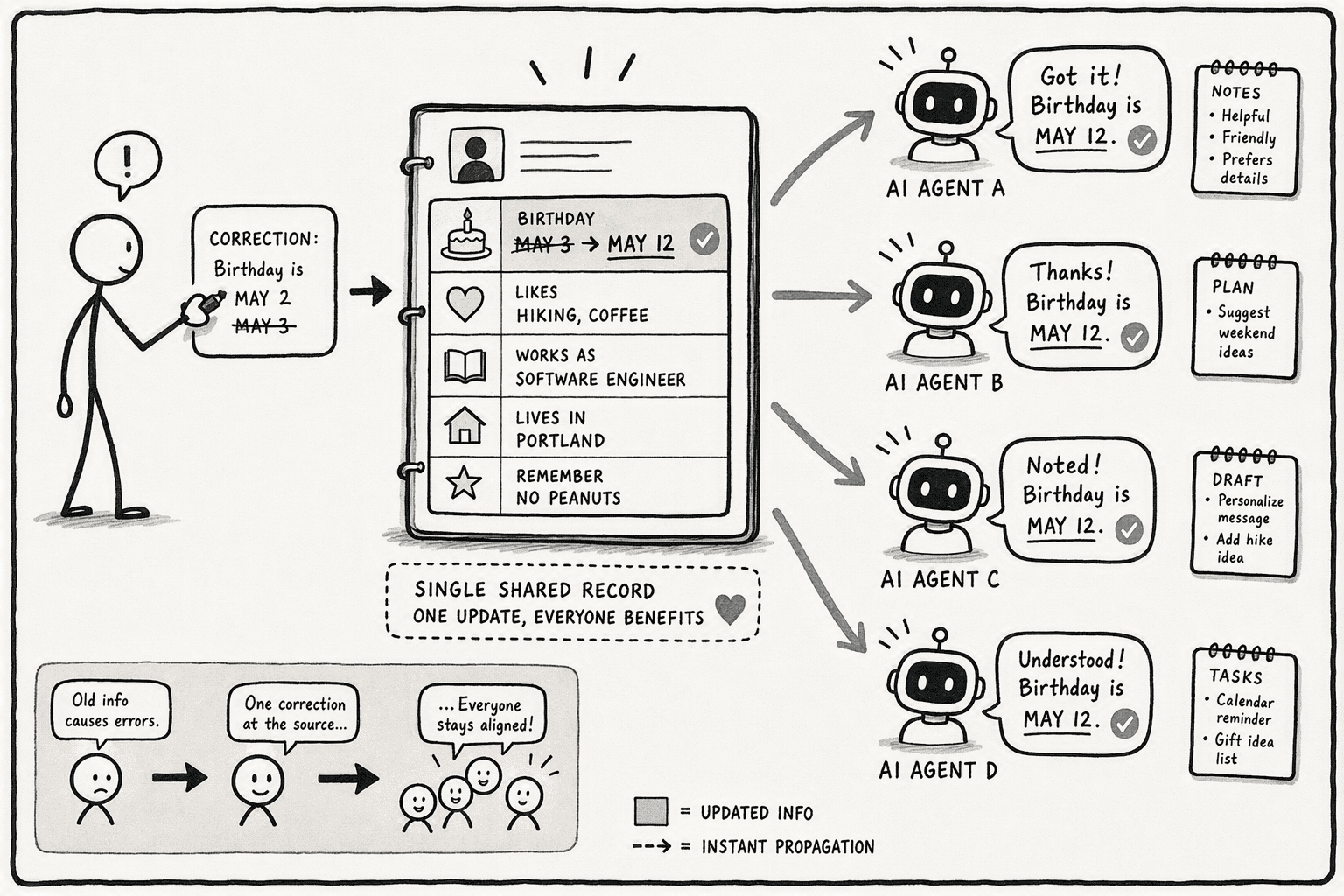
When someone corrects the agent, that correction changes what the agent draws on going forward for everyone, not just the one conversation where the mistake was caught. Without this, the same error gets independently caught and fixed by different people over and over, since none of those individual fixes ever reach each other.
7. Access is checked against the person the agent is acting for, not a blanket credential
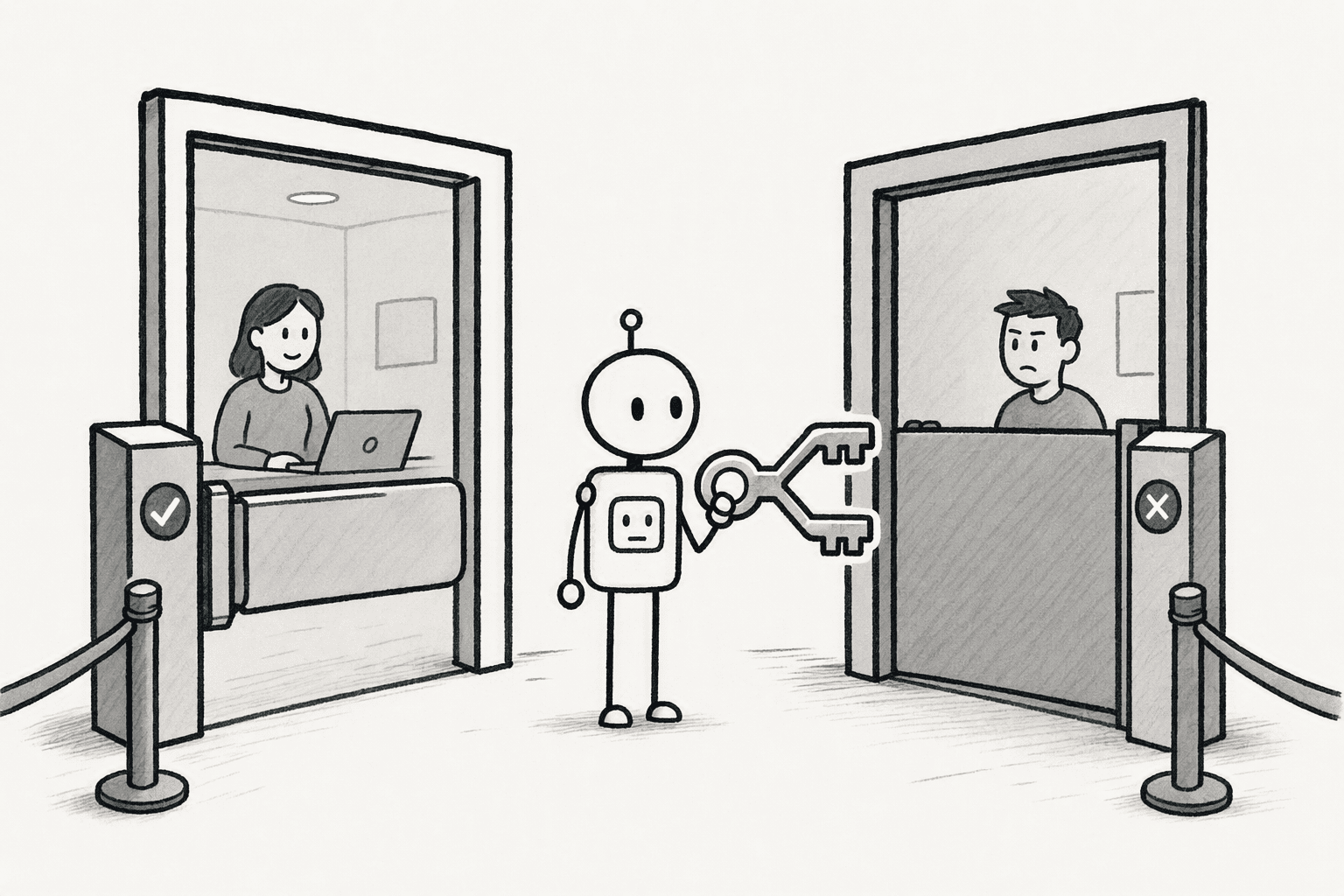
Rather than the agent operating under one broad, shared set of permissions, its access is evaluated against whoever it's actually acting on behalf of in that moment. A single shared credential handed to an agent becomes a skeleton key across everything it touches, the opposite of how a real team works, where different people can see different things by design.
How PromptQL makes AI agent-human collaboration possible
PromptQL's core thesis is that context can't be extracted once and handed to AI, it changes daily and decays the moment it's written down. The only durable answer is a flywheel: people and AI working together in the flow of work, capturing and curating context just-in-time rather than as a separate, one-time task nobody wants to own.
That thesis shows up as a few concrete features:
- Shared threads. Multiple people and the agent work in the same thread in real time, not separate, private conversations.
- Mid-task handoffs. @-mention the right teammate, and the agent keeps working while they get pulled in.
- Corrections that stick. A fix gets captured into a shared wiki, so it sticks for the whole team afterward.
- Consistent identity and permissions. Access is enforced at the data layer, every user, every source, every query, so an agent only ever works with what the person it's acting for actually has access to.
- A traceable record. Every action is logged and explainable, not a black box.
As PromptQL's own framing puts it: agents that work with one user are demos. Agents that work with a whole team are products.
See how PromptQL brings people and AI into shared threads, or learn more about PromptQL.
Conclusion
Real human-agent collaboration isn't about how capable a model is in isolation, it's about whether the context, the reasoning, and the access controls actually work the way a real team does. Shared context instead of private memory, visible reasoning instead of black-box answers, the right person pulled in at the right moment, and permissions that respect who's actually asking. Get those right, and an AI agent stops being a tool one person happens to use and starts being something a whole team can genuinely work with.
Frequently Asked Questions
Is a human-AI agent team the same thing as just using a chatbot?
No. A chatbot is typically a private, single-session tool, whatever you teach it stays with you and resets the next time someone else opens it. A genuine human-agent team shares context, reasoning, and corrections across everyone working with the agent, so it behaves more like a teammate than a personal assistant.
How does an AI agent know when to loop in a human?
Well-designed collaboration gives an agent a way to recognize when a question falls outside what it can confidently resolve, or when a decision genuinely needs a specific person's input, and to pull that person in directly rather than guessing or stalling silently.
Does working with AI agents this way require giving up control?
No, if anything it should increase control. Visible reasoning, defined approval checkpoints, and permissions tied to the actual person asking all give humans more insight into what an agent is doing, not less, compared to a black-box tool that just returns an answer.
What's the difference between an AI agent working with one person versus a whole team?
An agent working with one person only ever holds that person's context and only that person benefits from what it learns. An agent built for a whole team shares context, corrections, and reasoning across everyone using it, so the whole team gets smarter from every interaction, not just the individual who happened to have it.
Sources
- PromptQL | Multiplayer AI with shared context. - promptql.io
- PromptQL | About us - promptql.io (2026)
- PromptQL | Multiplayer Claude cowork, on any LLM. - promptql.io (2026)
- PromptQL | Multiplayer AI SDK - promptql.io (2026)
- Human-agent team - Wikipedia - en.wikipedia.org (2026)