05 Nov, 2026
•
8 MIN READ
How to Stop Marketing and Product Teams From Getting Conflicting AI Outputs
Key Takeaways
- Conflicting outputs come from different context. Each team's AI answers correctly from the documents it was given.
- Shared facts matter more than shared prompts. Name an owner, keep one fact sheet and check outputs against it.
- A fact sheet only helps while it stays current, and people rarely have time to maintain one.
- PromptQL's Company Brain captures corrections from shared threads into a wiki that both teams' AI use.
Why Do Marketing and Product Teams Get Conflicting AI Outputs?
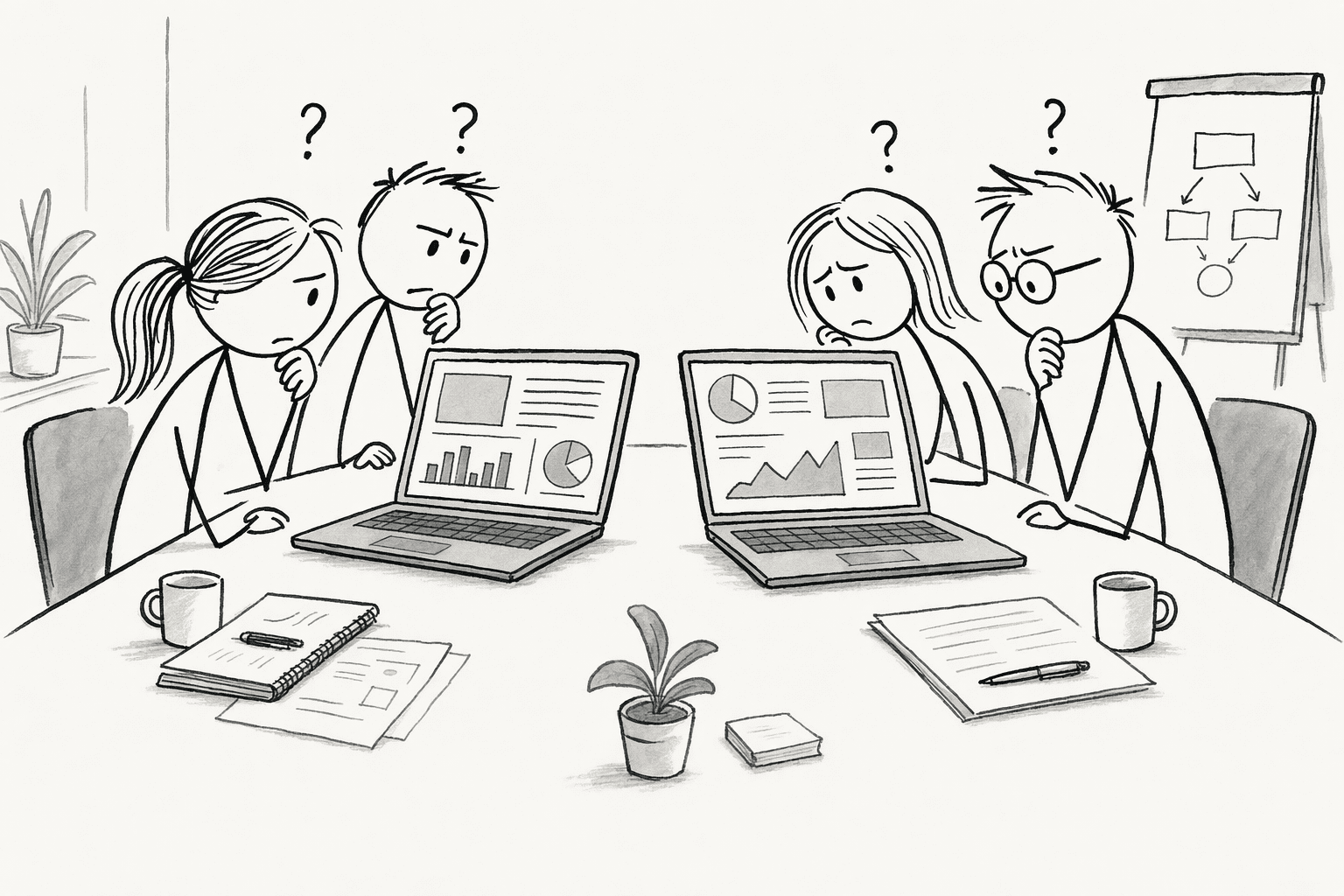
- Separate sources: Product's AI reads roadmaps and specs, while marketing's reads campaign briefs and messaging docs.
- Different definitions: Teams use a word like "deployment" or "active customer" to mean different things.
- Stale documents: A spec changes, and the update reaches people but not the documents the AI reads.
- Siloed corrections: Someone fixes a wrong claim in their own output, but the root error never returns to the source.
What Do Conflicting AI Outputs Cost Marketing and Product Teams?
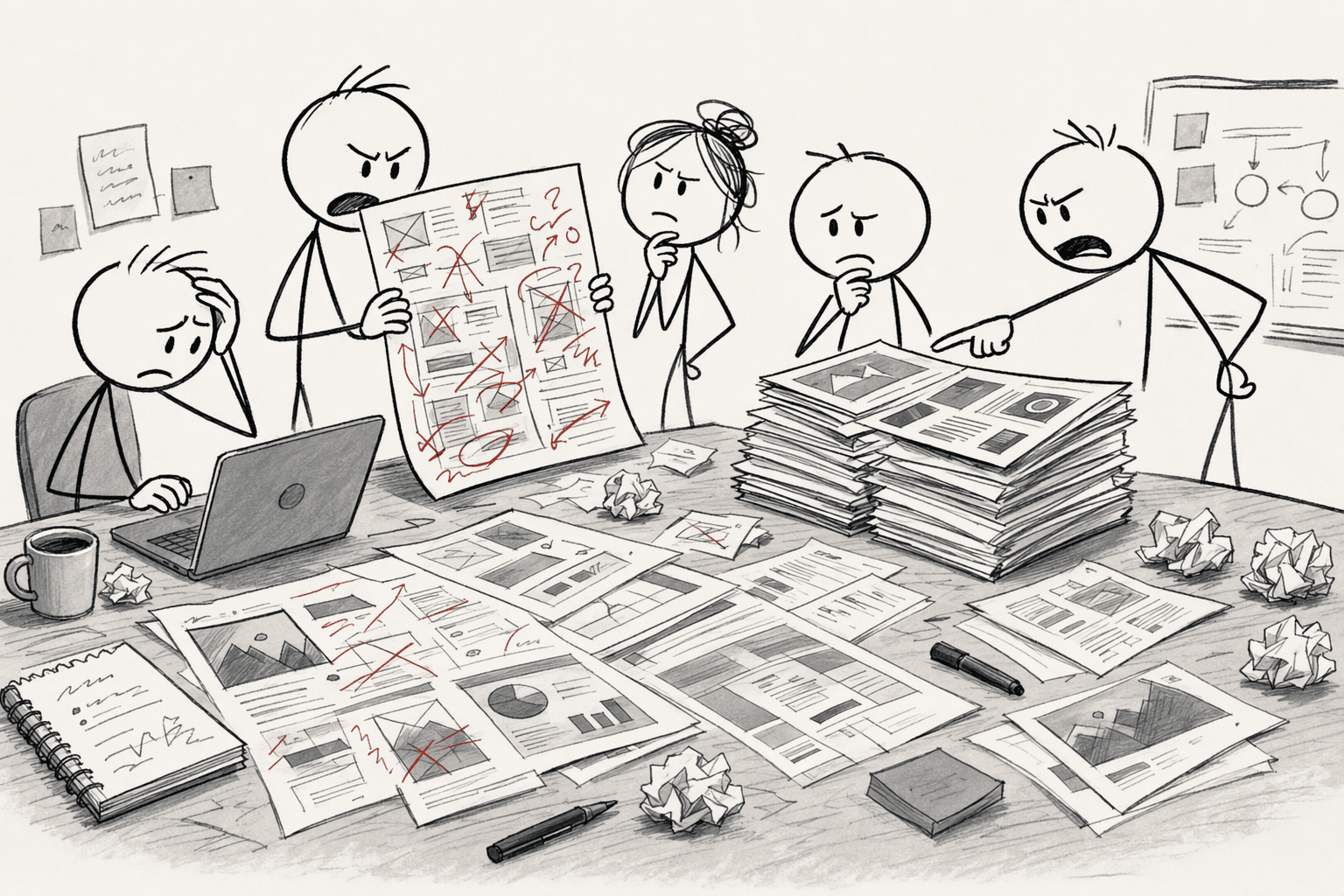
- Premature promotion: Marketing promotes a feature before product has finalized it.
- Mismatched positioning: Campaign copy and product documentation describe the same feature differently.
- Conflicting timelines: Launch dates and campaign dates do not line up.
- Rework: Employees spend hours checking AI drafts instead of using them.
How Can You Stop Marketing and Product Teams From Getting Conflicting AI Outputs?
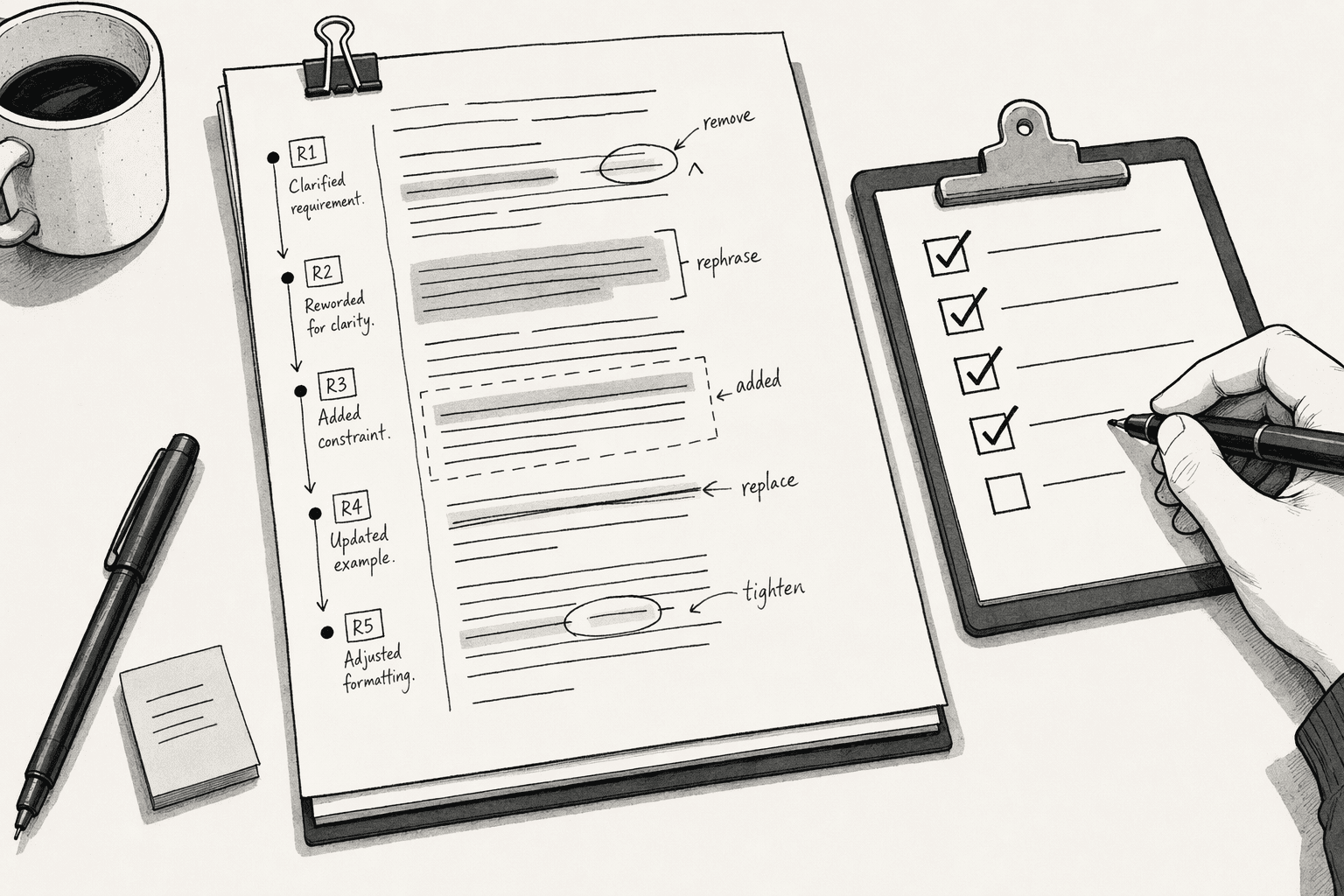
Step: 1. Name an Owner for Each Fact
- List the facts launch copy depends on: Availability, dates, plan tiers, limits, supported integrations and pricing.
- Assign one owner per fact: Usually the product manager or a technical lead.
- Record who approves changes: One name, not a team alias.
Step: 2. Build One Shared Project Fact Sheet
- Include the essentials: Specs, constraints, launch dates, target customers and legal boundaries.
- Stamp each entry: Add the owner's name and a "last verified" date.
- Make it the grounding document: Both teams' AI should read it at the start of every task on the project.
Step: 3. Standardize Definitions in a Shared Glossary
- Pick 10 to 20 terms: Start with the words that appear in both teams' work.
- Write one definition for each: Include the owner and any words people should not use as synonyms.
- Keep revision history: When a definition changes, the old version stays traceable.
Step: 4. Map Product Facts to Approved Claims
- Build a two-column table: Put the verified fact on the left and the approved public wording on the right.
- Add a risk level and a source link: Each claim should point back to its fact sheet entry.
- Limit the marketing AI to the table: Claims outside the list get flagged for review.
Step: 5. Log Changes and Check Outputs Before They Ship
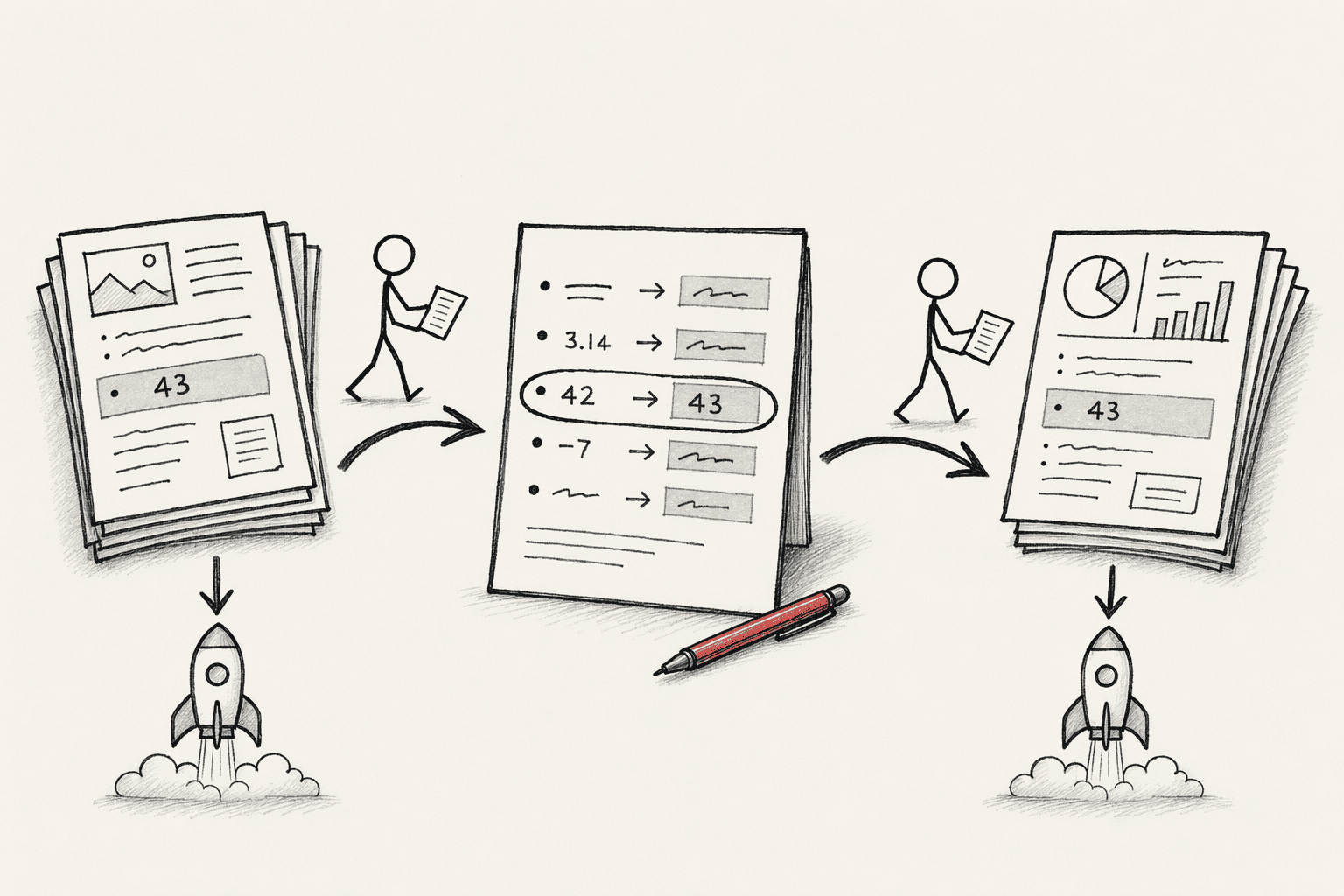
- A change log: Each entry names what changed, the new value, the owner and which outputs to rerun.
- A pre-publish check: Compare every factual claim in a draft to the fact sheet before it reaches a customer.
- Risk tiers for review: The AI CMO team suggests treating internal drafts as low risk, campaign creative as medium and regulated or customer-facing personalization as high, with human review for medium and high.
What Is a Company Brain and How Does It Keep AI Outputs Consistent?
- One shared context: Marketing and product AI draw on the same definitions, decisions and project history.
- Captured corrections: A fix made once becomes shared knowledge, so the same error does not return.
- Accumulated decisions: Past choices and their reasons stay available, so teams stop reopening them.
- Reuse across work: Findings from one investigation inform the next.
How Does PromptQL's Company Brain Align Marketing and Product Teams?
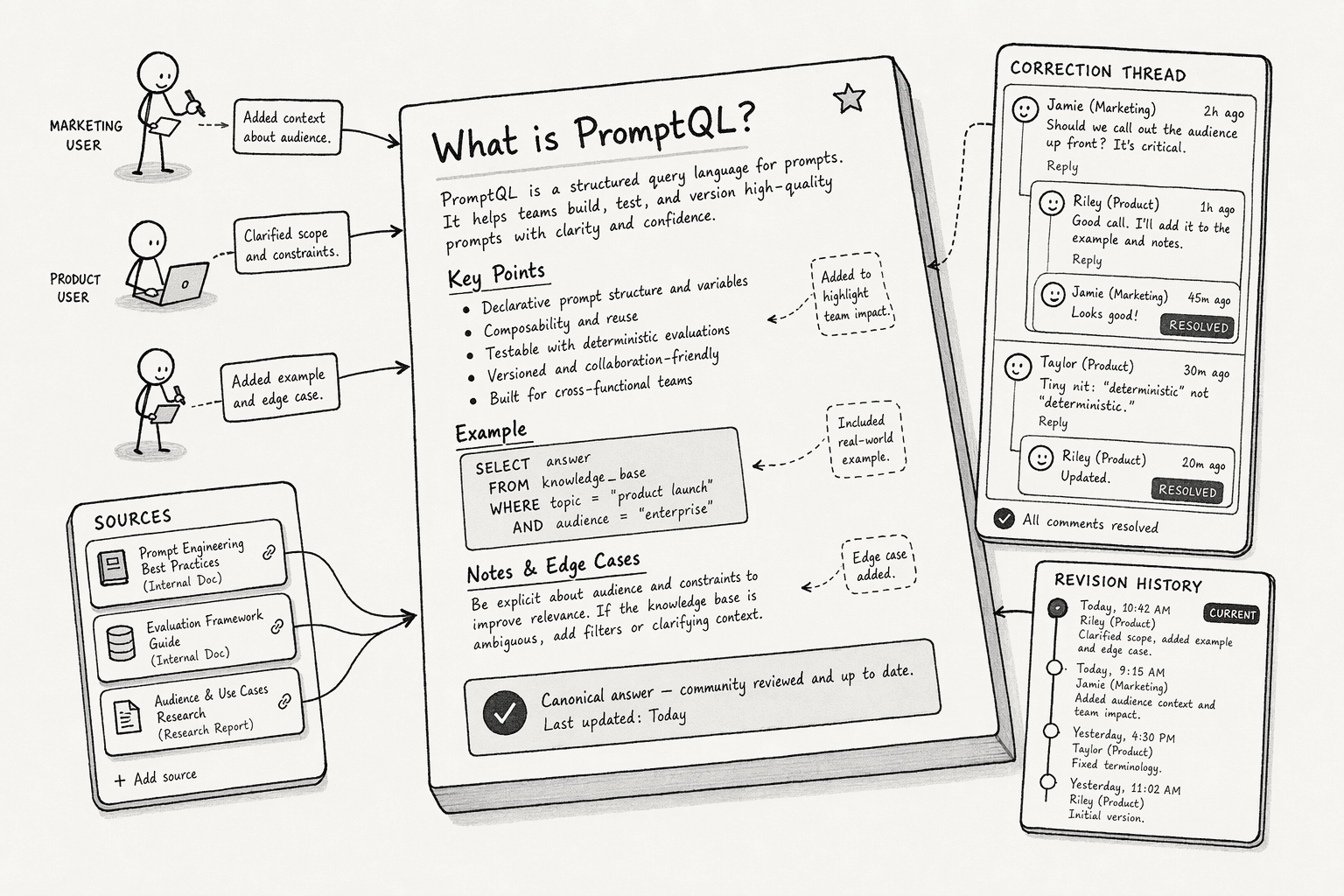
- A shared wiki of cited, scoped knowledge: Definitions, decisions and exceptions live in a shared wiki with revision history, so a fact has one home.
- Corrections in the flow of work: When the AI gets something wrong, a teammate corrects it in the thread, reviews the suggested entry and clicks "Add to wiki."
- Visible reasoning: On each task, PromptQL shows the sources it pulled and the assumptions it made, so a conflict is easy to trace.
- Connected sources: It reads from tools such as Slack, Google Docs, Snowflake, PostHog and Salesforce, so the wiki starts from context your teams already created.
- Access that follows the person: Scopes separate personal, internal, confidential and customer knowledge, and pages outside a person's access never enter the agent's context.
How Does a Company Brain Work on a Real Product Launch?
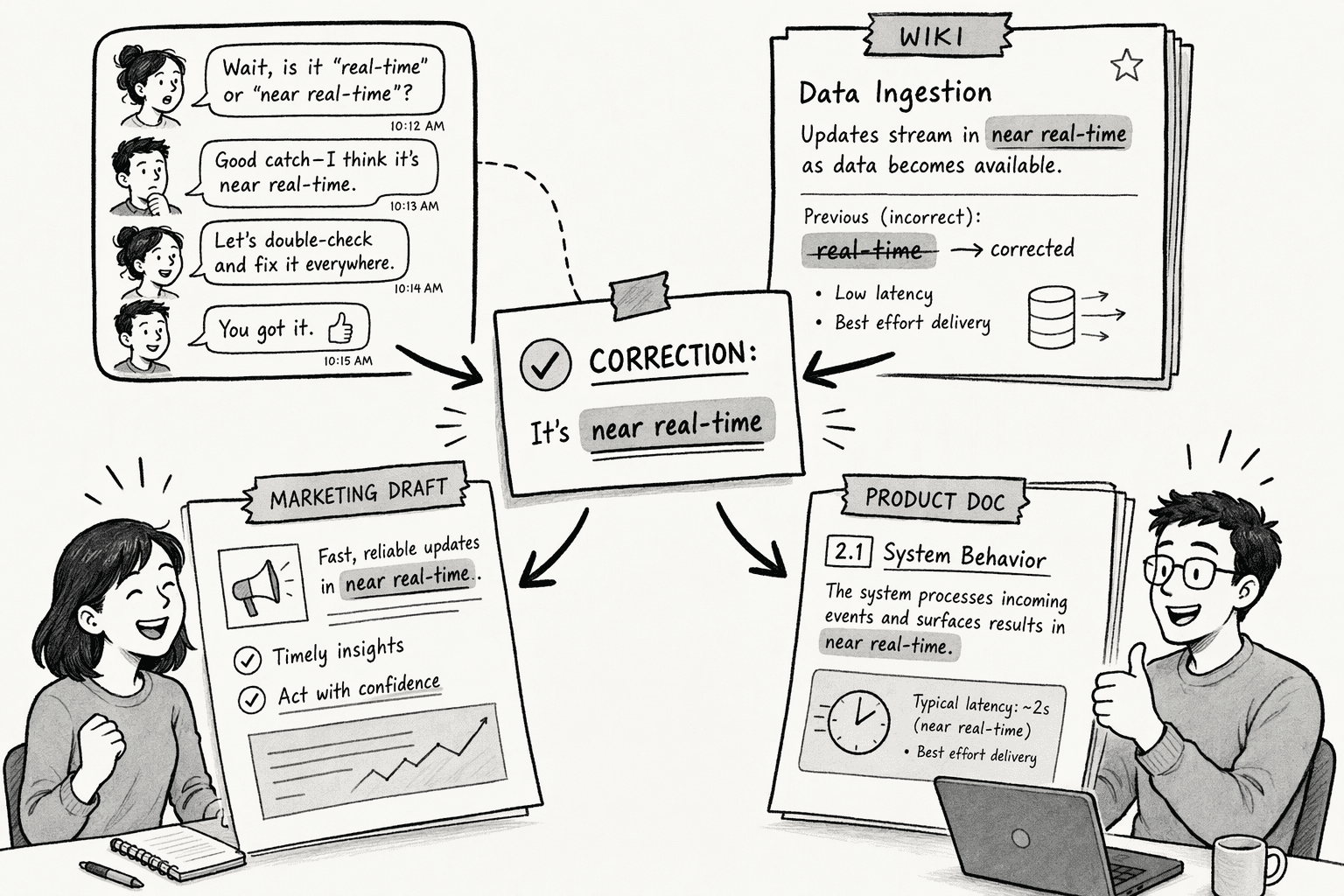
- The AI gets it wrong: Marketing asks for campaign messaging, and the draft promises one-click export.
- Product corrects it: The product lead replies in the thread that export is a three-step manual process at launch and adds that to the wiki.
- Both teams build on the fix: Product's documentation request and marketing's next draft both start from the corrected entry.
- The next launch benefits: The wiki keeps the entry, so nobody explains it again.
| Area | Without a Company Brain | With a Company Brain |
|---|---|---|
| Product information | Teams reference separate documents | Teams access shared context |
| Feature descriptions | AI may generate different explanations | AI uses common product information |
| Customer personas | Different audience assumptions | Shared customer definitions |
| Launch timelines | Separate updates and references | Consistent project context |
| Previous decisions | Context gets repeated or lost | Decisions remain accessible |
| Campaign planning | More manual cross-checking | Better-informed collaboration |
Conclusion
Frequently Asked Questions
Do Marketing and Product Teams Need to Use the Same AI Model?
How Often Should Shared Project Facts Be Updated?
Does the Same Problem Affect Sales and Support Teams?
How Do You Keep Confidential Roadmap Items Away From Marketing's AI?
Sources
- Marketing Governance Framework for AI-Powered Teams - theaicmo.com
- LLM Output Consistency: The Production Problem Product Managers Need to Own - www.institutepm.com
- INTEGRATING GENERATIVE AI INTO TEAM-BASED MARKETING WORKFLOWS - www.calstatela.edu