Marketing's AI and product's AI are usually both right from the POV of the documents they were given.
For example, the head of product's assistant, working from the PRD, prioritizes the analytics dashboard, while the marketing director's assistant, working from last quarter's positioning deck, drafts a campaign around a wallet integration.
Same project, two confident outputs, and no shared source to settle which one is correct.
This guide covers why marketing and product AI outputs conflict and six ways to keep them aligned, from naming an owner for each project fact to checking every draft against a shared fact sheet before it ships.
Key takeaways
- Conflicts come from different facts: Each team's AI answers correctly from the documents it was given, so the fix is shared facts, not better prompts.
- Give every project fact one owner: Product owns what is true, and marketing owns how it is said.
- Keep a fact sheet and a claims list: One page of approved facts and a list of what marketing can say now keep both teams' AI aligned.
- Give both AIs the same sources: The same documents, definitions, and corrections for both teams remove most contradictions.
- Check drafts before they ship: Matching every factual claim to the fact sheet catches the conflicts that reached the draft.
Why marketing and product AI outputs conflict
The conflict is rarely the AI being wrong. It usually comes from five gaps between how the two teams feed and use their AI model:
- Different sources: Marketing's AI is grounded in briefs, positioning decks, and past campaigns, while product's is grounded in PRDs, tickets, and specs. Each is accurate about its own documents.
- Different definitions: Terms like audience, feature names, and launch date can mean different things to each team, so the same question gets a different answer, mostly meaning the same thing.
- Stale facts: A roadmap change reaches one team's documents and not the other's, so one AI describes a plan that no longer exists.
- No check at the handoff: Copy written from a brief is rarely compared with the spec, so a conflict is found after publishing or in a late review.
How to keep marketing and product AI outputs aligned
The six actions below give both teams the same facts and then check their outputs against them:
1. Name one owner for each project fact
Every fact that both teams' AI might use needs a single owner: the launch date, the scope, the feature names, the pricing, and the target audience.
Product owns what is true, and marketing owns how it is said.
When a fact changes, the owner updates it in one place, so nobody has to guess which team's version is current.
2. Write a project fact sheet that both teams' AI read
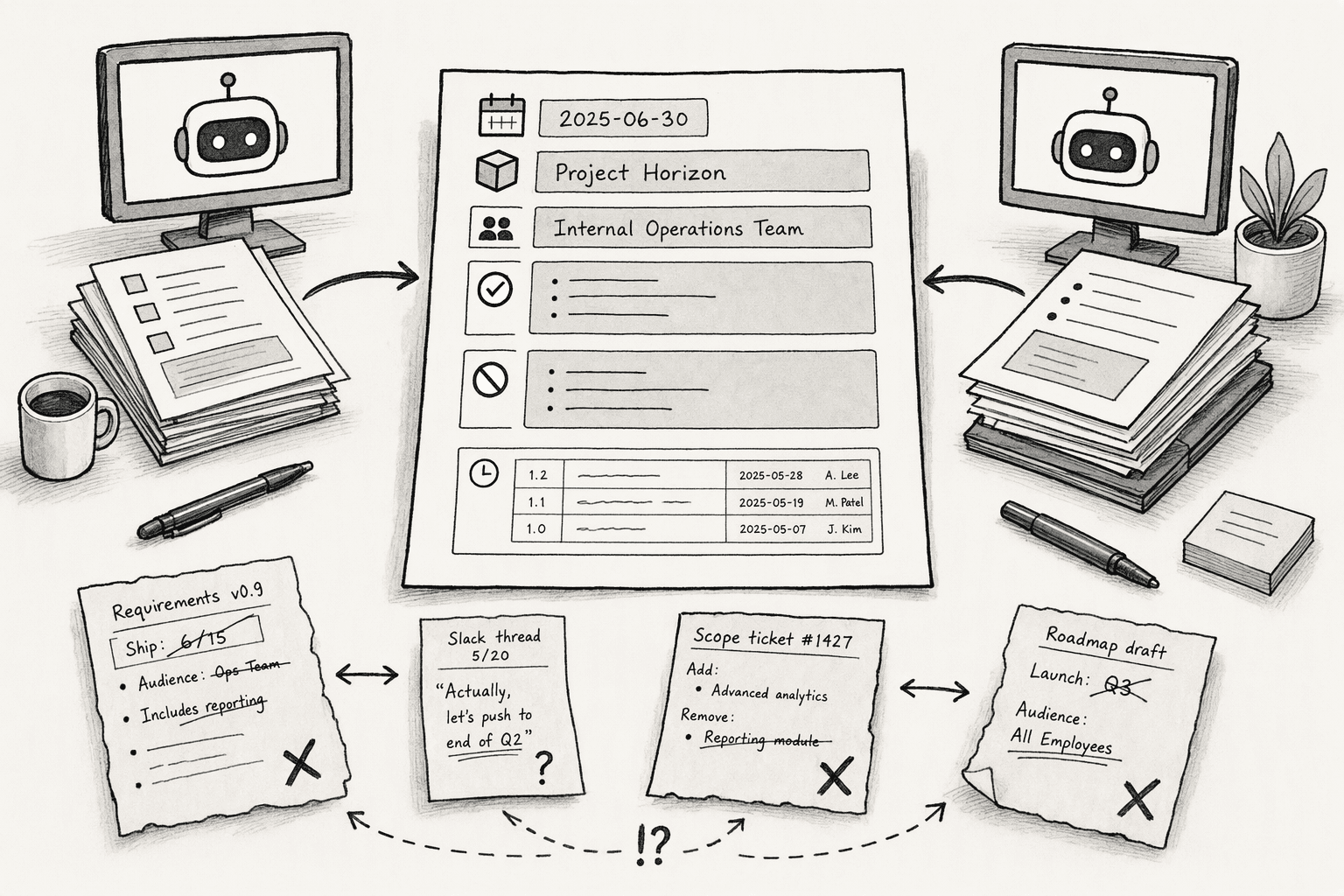
Start with an audit: list the sources each team's AI reads today, such as briefs, PRDs, tickets, and decks, and compare them for contradictions.
Then write a one-page fact sheet that covers what ships, when, what it's called, who it's for, and what is out of scope, with a version history so a change is visible. Link it from both teams' project spaces, so each AI starts from the same page.
3. Keep an approved claims list
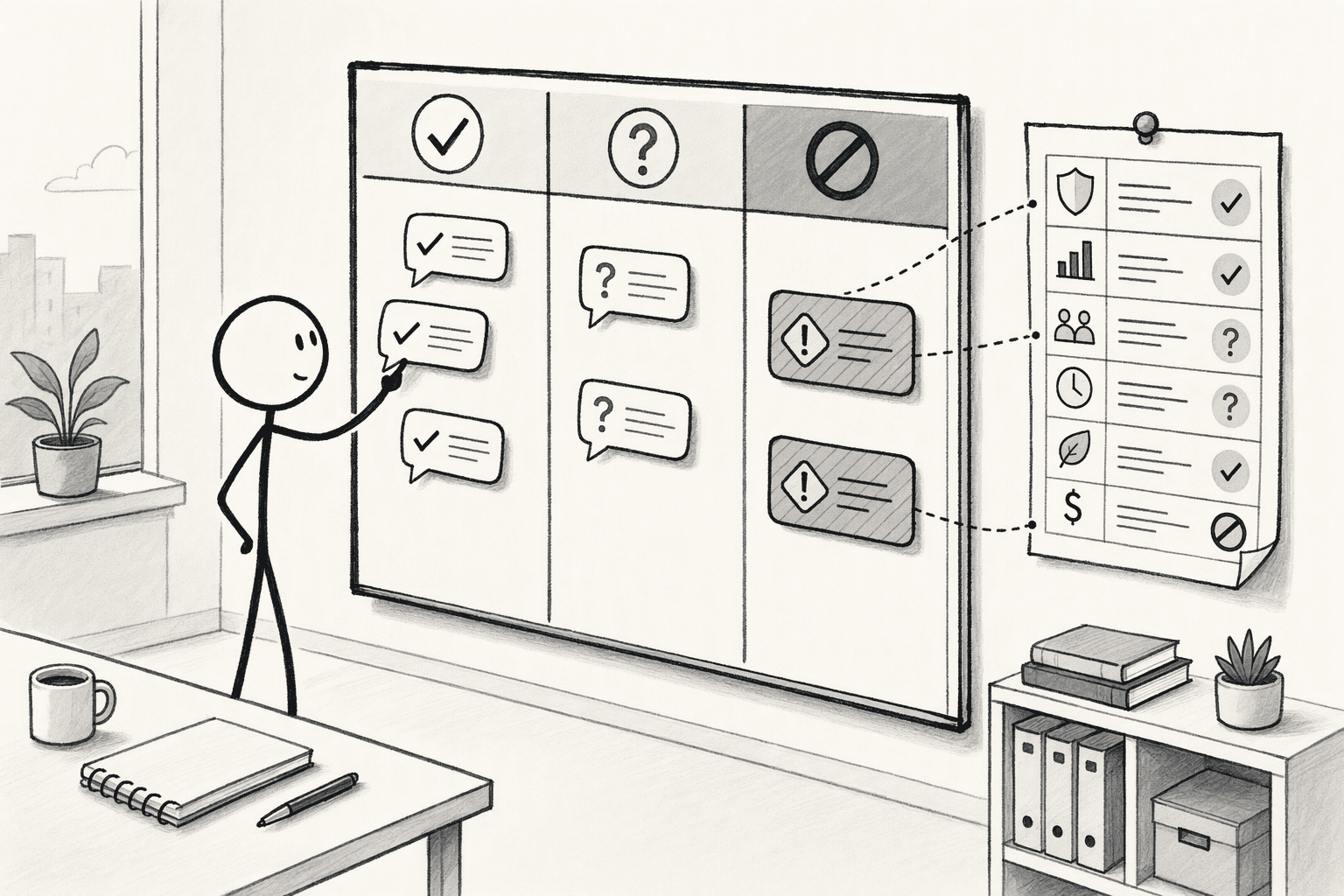
A fact sheet says what is true, and a claims list says what can be said.
Split marketing's statements into three groups: what can be said now, what needs product confirmation, and what can't be said yet, and map each to a product-verified statement.
Add one rule: any marketing output that mentions a feature, date, or price that isn't marked approved in the fact sheet gets flagged before it goes anywhere.
4. Give both teams' AI the same sources and glossary
Put both teams on the same material: a shared project or connected sources, the same glossary of terms, and a place where corrections are written down so they reach both.
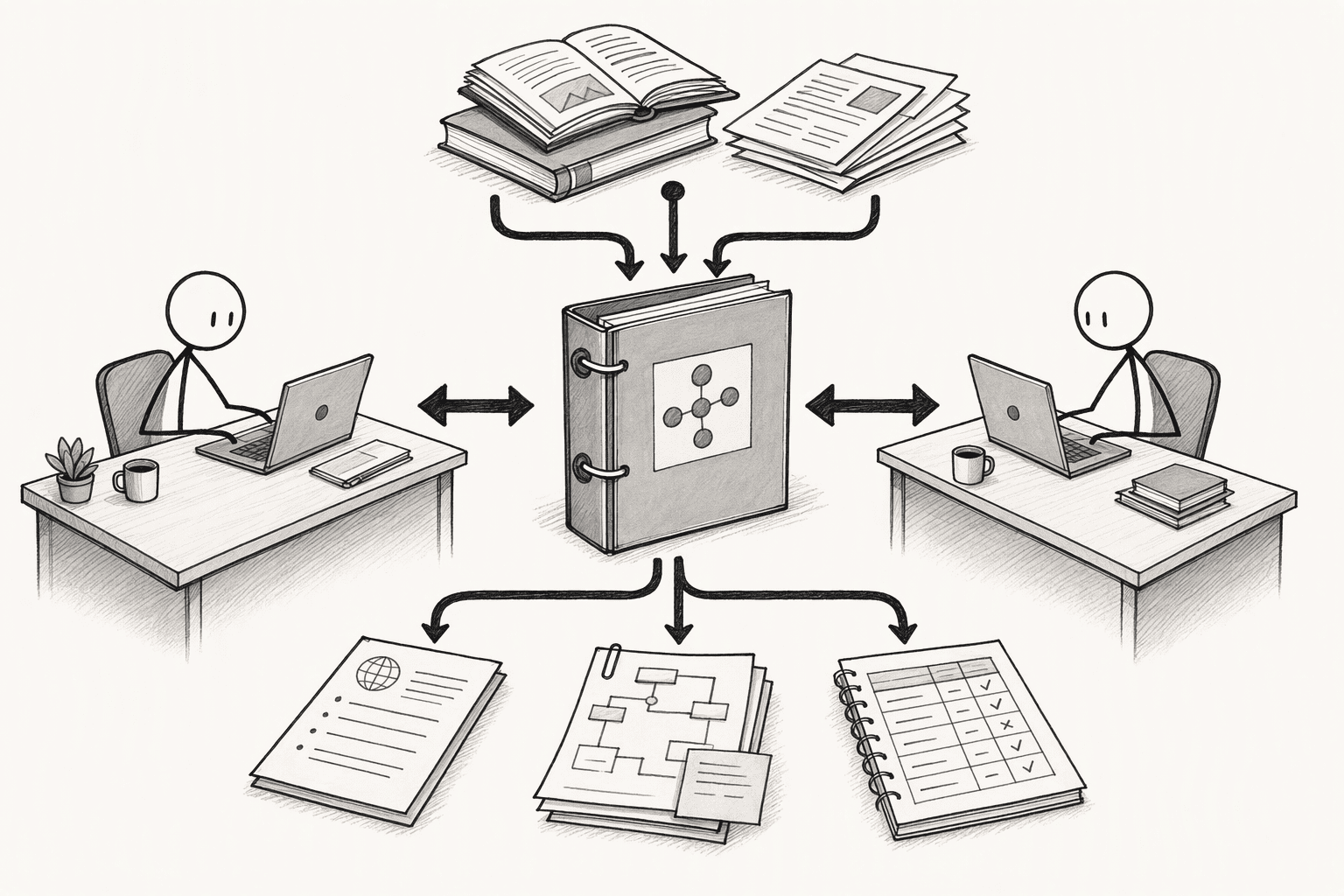
In ChatGPT, a shared project holds instructions, files, and chats for the team and can't see any member's personal memory, which keeps the shared facts separate from personal details.
PromptQL takes the same idea further. Marketing and product work in a shared thread, context is seeded from tools such as Slack, Google Drive, and GitHub, and a correction made once is captured as a cited wiki entry that both teams' next answers start from. PromptQL even acts with the permissions of the person who asked, and results shared in the bot are visible to its audience, so sensitive outputs need appropriate sharing controls.
5. Announce changes where both teams' AI will see them
Facts change mid-project, and the conflict returns the day they do.
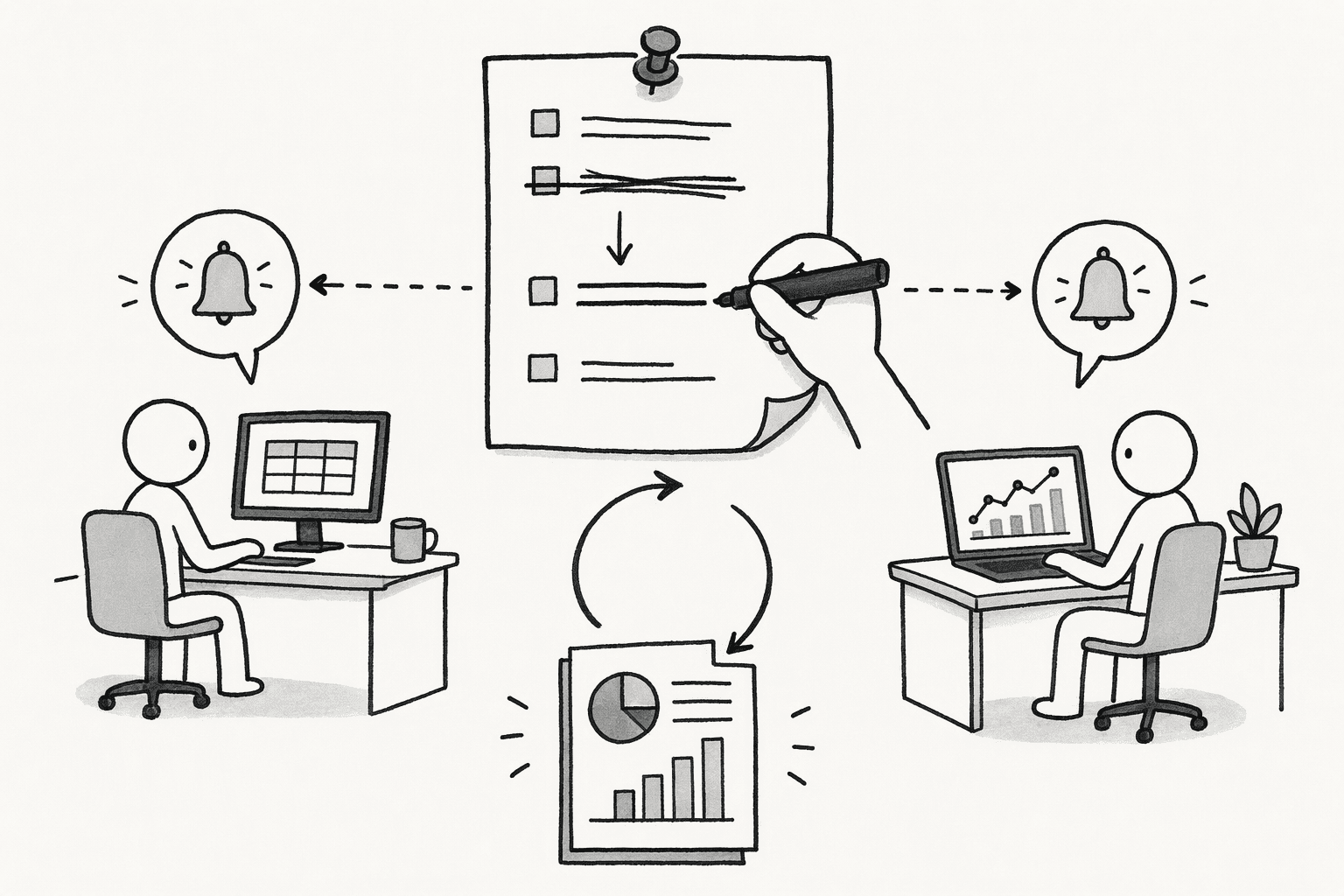
When they do, update the fact sheet first, then notify both teams, and re-run any output that depended on the old fact.
Putting the change in the source both teams' AI read is what makes it reach both, because a message in one team's channel reaches only that team's AI.
6. Check for conflicts before anything ships
Before a draft goes out, ask the AI to list every factual claim in it, match each claim to the fact sheet, and have the owner approve what is left.
Review pricing, availability, and compliance statements more strictly than general copy, since an error there costs more.
To spot divergence early, send one product definition to both teams and ask each AI to describe it. Any difference points to a source that needs fixing.
Track the conflicts found at review and the rework cycles between the two teams before sign-off, and aim for both to fall.
Conclusion
Treat project facts as shared assets with owners, not as documents that each team's AI reads in its own copy. Keep the fact sheet and the claims list current, run the conflict check before anything ships, and review the measures as projects change.
PromptQL is built for this kind of shared context: marketing and product work in the same thread, corrections are captured once, and every answer starts from the same facts. Its own sales and revenue marketing leaders, who sit far from product, work in the same shared context as the product team.
Frequently Asked Questions
What causes marketing and product teams to receive conflicting outputs from the same AI tools?
Divergence happens when AI agents pull from siloed, ungoverned local data sources instead of one authoritative enterprise view. Marketing's agent reads an old wiki page while product's agent reads an engineering ticket, so the same prompt produces completely different, plausible-sounding recommendations from different local sources.
How can a shared, permissioned knowledge base prevent divergent AI-generated results?
It gives every AI agent one canonical set of product definitions, customer segments, and business rules to read from. Both teams query the same underlying nodes, so when either asks about a feature, they get the identical definition rather than two different versions of the truth.
Is a shared prompt enough to keep outputs aligned?
No. A shared prompt gives both teams the same instructions, but not the same facts. The facts have to live in a shared source, such as a fact sheet, that both teams' AI read.
Who should own the facts, marketing or product?
Product should own what is true, such as scope, dates, and names, and marketing should own how it is said. Both need to agree on the approved claims, and every fact should have one named owner.
How do you handle facts that change mid-project?
Update the fact sheet first, notify both teams, and re-run any output that depended on the old fact. A change made only in one team's documents reaches only that team's AI.
Sources
- How to Build a Company Brain - promptql.io
- We cut new-hire ramp time in half. Here is the exact 7-step blueprint. - promptql.io
- PromptQL Tag | The company-wide AI agent for Slack - promptql.io
- ▶ Research Brief - www.ilo.org
- Beyond the Commit: Developer Perspectives on Productivity with AI Coding Assistants - arxiv.org
- Making AI Productivity Deliver Real Value | BCG - www.bcg.com
- What should teams change in the codebase to make AI-assisted development safer? - nhimg.org
- AI in Product Development: How to Avoid More Work - www.uncountable.com