
Ask a question
Start with an ad-hoc query — you're in the driver's seat for every step of the loop.
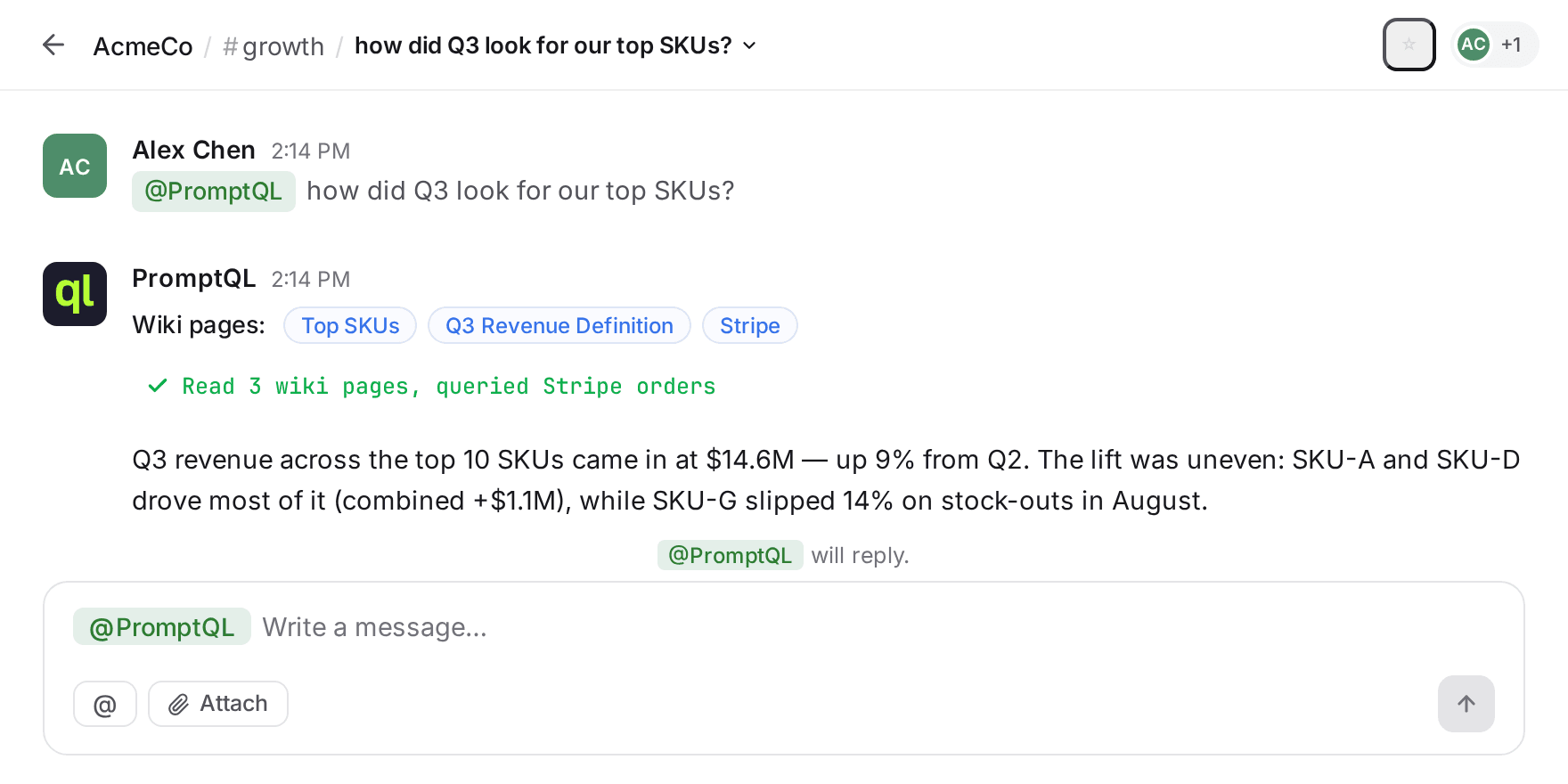
What it is
An ad-hoc query is the most ordinary thing you can do with PromptQL: type a question in natural language and read the answer. No schema to look up, no SQL to write, no boilerplate. PromptQL plans the work against the databases, integrations, and remote agents you've connected, and brings the result back.
It's also the foundation. Every artifact, schedule, alert, and action that comes later in Basics started life as someone asking a question this way. The rest of the section is about taking pieces of this loop and handing them off.
How to do it
- Start a new thread in one of your rooms.
- Ask the way you'd ask a teammate — “how did Q3 look for our top SKUs?” PromptQL handles your jargon, your acronyms, your team's words for things, and gets sharper the more you use it.
- Read the answer. If you want to drill in, PromptQL shows what it pulled from where under the hood — but most of the time you're checking the result itself.
- Adjust if anything's off. Just tell it what to change — in whatever language you're working in.
That's the whole loop, walked by hand: you ask, PromptQL plans and runs, you check the result, you take it from there.
What's next
You just ran the loop the slow way — the way every PromptQL workflow starts. The rest of Basics is about handing off pieces of it, one stage at a time.
First up: Turn it into an artifact. Same question, same loop — but now PromptQL can run it again on demand without you retyping it. That's the first hand-off: Input goes from manual to reusable.